Apple Pay Class Action Clears Certification Hurdle as US Banks Unite Against NFC Toll
A US court has certified a class action brought by banks challenging the fees Apple charges for Apple Pay access, marking a significant escalation in antitrust scrutiny of Big Tech's grip on contactless payment infrastructure. The case puts America's courts on a path already mapped by EU regulators and Australian banks.
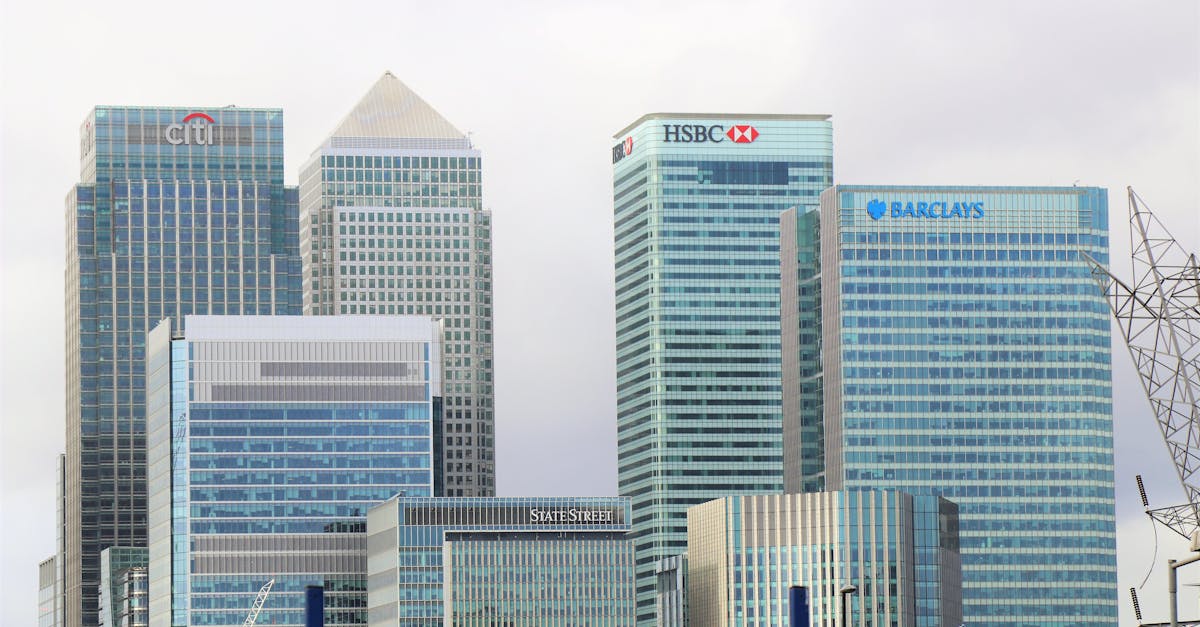
Class certification consolidates bank plaintiffs into a single high-stakes action that dramatically raises Apple's litigation exposure and could reshape how platform operators monetise NFC access across the entire payments industry.
A Legal Reckoning for Apple's Wallet Toll Booth
A class action lawsuit targeting Apple over the fees it has historically charged US banks for access to Apple Pay has cleared a significant legal hurdle, with financial institutions now able to formally join the action. The development marks an escalation in what has become one of the more consequential antitrust disputes in consumer payments — one that cuts to the heart of how Big Tech monetises its grip on the smartphone layer of the financial stack.
The lawsuit centres on fees that banks have paid to Apple in exchange for the ability to offer their customers contactless payments via Apple Pay. While the precise figures involved remain subject to litigation, the structural complaint is well-documented in the broader industry: Apple has long extracted a share of interchange revenue from card issuers as the price of admission to its wallet, a toll that has no direct equivalent on Android, where near-field communication (NFC) hardware access is not gated by the operating system vendor.
The NFC Access Question
At the technical core of the dispute is Apple's historical control over the NFC chip embedded in its devices. For years, Apple restricted third-party developers and rival wallet providers from accessing that chip directly, effectively making Apple Pay the only route through which iPhone users could make tap-to-pay transactions at physical terminals. Banks wishing to reach their own customers at the point of sale had no option but to route through Apple's infrastructure — and pay accordingly.
That dynamic has begun to shift. Regulatory pressure in the European Union, culminating in commitments Apple made to avoid formal Digital Markets Act enforcement action, has already forced the company to open NFC access to third parties in Europe. A similar debate has played out in Australia, where the major banks mounted an early and well-publicised challenge to Apple's wallet terms. The US litigation now places that same argument before American courts, with class certification representing a meaningful vote of confidence from the judiciary that the banks' collective grievance is coherent and legally viable.
The structural complaint is well-documented: Apple has long extracted a share of interchange revenue from card issuers as the price of admission to its wallet — a toll that has no direct equivalent on Android.
What Class Certification Actually Means
Reaching the class certification stage is a significant procedural milestone, though it is not a finding of liability. What it signals is that a court has determined the plaintiffs — in this case, a group of US banks — share sufficiently common legal and factual questions to proceed together rather than as individual claimants. For the banks, collective action substantially increases both their litigation leverage and the potential scale of any damages award or settlement.
It also raises the stakes for Apple considerably. A certified class means the company faces consolidated exposure across what could be a large number of institutions that issued cards linked to Apple Pay and paid fees over an extended period. That changes the settlement calculus in ways that individual suits simply do not.
Broader Antitrust Context
This case does not exist in isolation. Apple is navigating antitrust scrutiny across multiple jurisdictions simultaneously, with regulators and private litigants increasingly targeting the company's control of the iPhone as a platform through which third-party financial services must pass. The US Department of Justice filed its own broad antitrust suit against Apple in 2024, with the smartphone ecosystem — including financial features — squarely in scope.
For the payments industry, the significance extends beyond Apple specifically. The lawsuit is a test of whether platform fees extracted at the operating-system layer can be successfully challenged as anticompetitive under US law. A finding against Apple would have implications for how any dominant mobile platform prices access to its NFC or biometric authentication infrastructure.
What Banks Will Be Watching
From the issuer side, the calculus is straightforward: any institution that paid Apple Pay participation fees and believes those fees were inflated by a lack of competitive alternatives has a financial interest in joining the action. The invitation to participate in the class is, in effect, an opportunity to recover a portion of costs that banks have long absorbed quietly rather than contest publicly.
Whether large issuers — many of whom maintain complex commercial relationships with Apple and have little appetite for a public fight with one of their largest customers' preferred platforms — will opt in at scale remains to be seen. Smaller institutions, with less to lose commercially, may prove more willing participants.
What is clear is that the era in which Apple could treat its wallet fee structure as beyond meaningful challenge is drawing to a close, in courtrooms on both sides of the Atlantic.
The Fin Desk Newsroom publishes verified reporting on the developments shaping fintech, payments and modern financial infrastructure.
Related Stories

How Open Banking Could Unlock Credit for the UK's Most Overlooked Borrowers
A CDFI serving NHS and public sector workers has secured FCA authorisation to pull bank account data directly into its lending decisions — raising the question of whether open banking can finally break the credit-invisible trap for millions of UK consumers.

AI Deepfakes Can Now Defeat All Four Layers of Bank KYC Controls, Research Finds
AI-generated synthetic identities have been shown to defeat document verification, video verification, liveness detection and biometric matching — the four layers underpinning most digital KYC frameworks in European banking. Research corroborated by State of Surveillance finds the assumption of layered redundancy that justified current remote onboarding architectures no longer holds.

Fintechs on Course to Overtake Banks as Top SME Cross-Border Payment Provider by 2028
A Mastercard-commissioned Bain & Company report projects fintechs will hold 48% of primary SME cross-border payment relationships by 2028, up from 30% in 2025, while banks are forecast to fall from 42% to 28% over the same period. The findings draw on a survey of internationally active SMEs across 11 countries.
Qonto Opens 11,000 sq m Paris HQ as Business Client Base Tops 750,000
French business-banking fintech Qonto has opened an 11,000 square metre Paris headquarters at 6 Impasse Bonne Nouvelle, nearly doubling its previous office footprint. The opening coincides with the platform surpassing 750,000 business clients across eight European markets.
The essential developments in modern finance
The essential developments across fintech, payments and modern finance — delivered to your inbox.
Free. No spam. Unsubscribe anytime.